
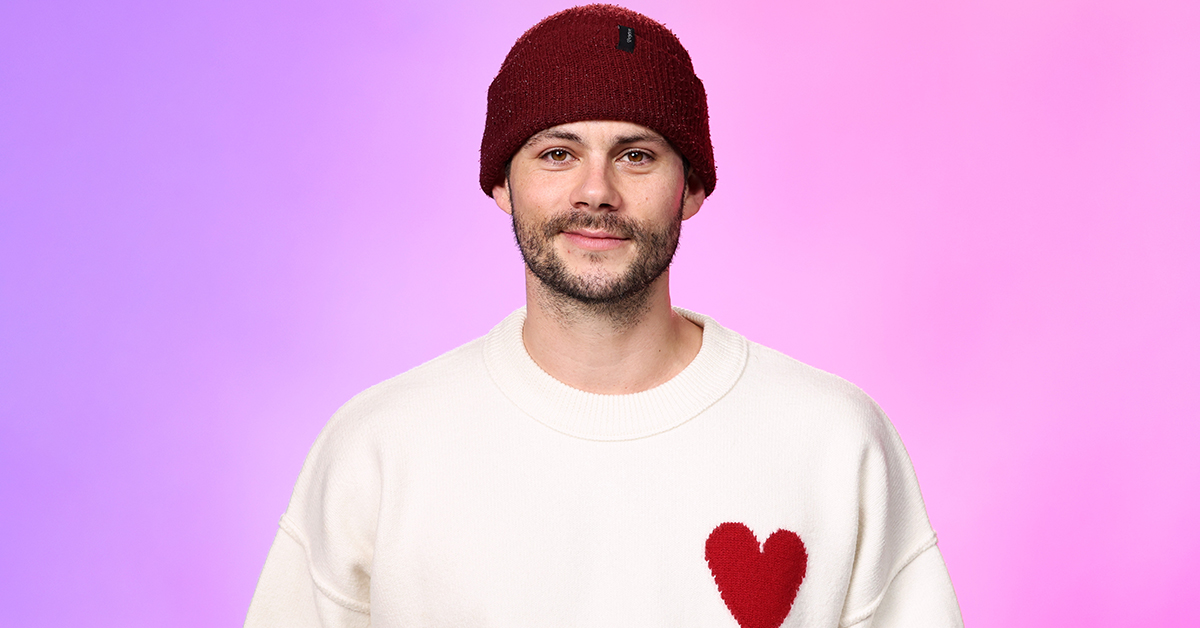
Dylan O’Brien is approaching one of the most complex conversations in modern film with nuance, humility, and a clear sense of responsibility.
The 34-year-old Maze Runner alum recently opened up about portraying a gay character in his 2025 film Twinless, a project that required him to play twin brothers with sharply different identities. In the film, O’Brien portrays Rocky, who is gay, and Roman, who is straight — a dual performance that demanded not only technical precision, but emotional and cultural awareness.
In a new interview with Dazed, O’Brien reflected on the broader debate surrounding straight actors taking on LGBTQ+ roles, and where he believes performances can fall short when fear or hesitation overrides authenticity.
Speaking candidly, O’Brien explained that a crucial part of his decision to play Rocky came from receiving what he described as “permission” from Twinless writer, director, and co-star James Sweeney, who identifies as gay.
“James is a gay man, and coming from a place I could trust. We had a similar take on straight actors playing gay parts, especially in recent years: you started seeing straight actors playing a queer role completely straight,” Dylan said. “It started to feel inauthentic. It was nice to have his insight, support, and calibration. He’d be like, ‘Go crazy on this one. We can dial it back if it doesn’t feel real.’ ”
O’Brien’s comments touch on a long-running tension in the industry: the balance between avoiding stereotypes and honoring the full spectrum of queer expression. In his view, the issue isn’t exaggeration, but erasure — performances that flatten queer characters into neutral, overly cautious versions of themselves.
Sweeney echoed that sentiment, praising O’Brien for committing fully to the role and making bold, specific choices.
“These are larger-than-life characters that feel so real because he brings so much pathos. In terms of him playing queer – I’ll take credit for giving him permission and pushing him in a direction to be fluid with the masculinity and femininity,” he explained.
Sweeney went on to articulate what he sees as a common pitfall when straight actors approach queer roles.
“A lot of times when straight actors play gay, they don’t lean into that out of fear of being vilified by the public, and are like, ‘We’re all the same, so I’m just going to play myself.’ I don’t mean that as a denigration to other straight actors, but I felt for Rocky to be attracted to Dennis, he would need to be comfortable with both masculinity and femininity – in my experience of dating.”
Together, their remarks highlight the importance of collaboration, trust, and lived experience in storytelling — particularly when navigating identities that aren’t one’s own. Rather than positioning himself as an authority, O’Brien frames his performance as a dialogue, shaped by guidance and openness rather than assumption.
The conversation arrives at a moment when audiences are increasingly vocal about representation, authenticity, and who gets to tell certain stories. While the industry continues to evolve, O’Brien’s approach underscores a growing understanding that good intentions alone aren’t enough; meaningful portrayals require listening, risk-taking, and accountability.
By grounding his performance in collaboration with Sweeney, O’Brien aimed to avoid both caricature and caution, allowing Rocky to exist as a fully dimensional character rather than a symbolic one. It’s a philosophy that prioritizes emotional truth over optics — and one that continues to resonate as Hollywood reassesses its relationship with identity, authorship, and representation.