

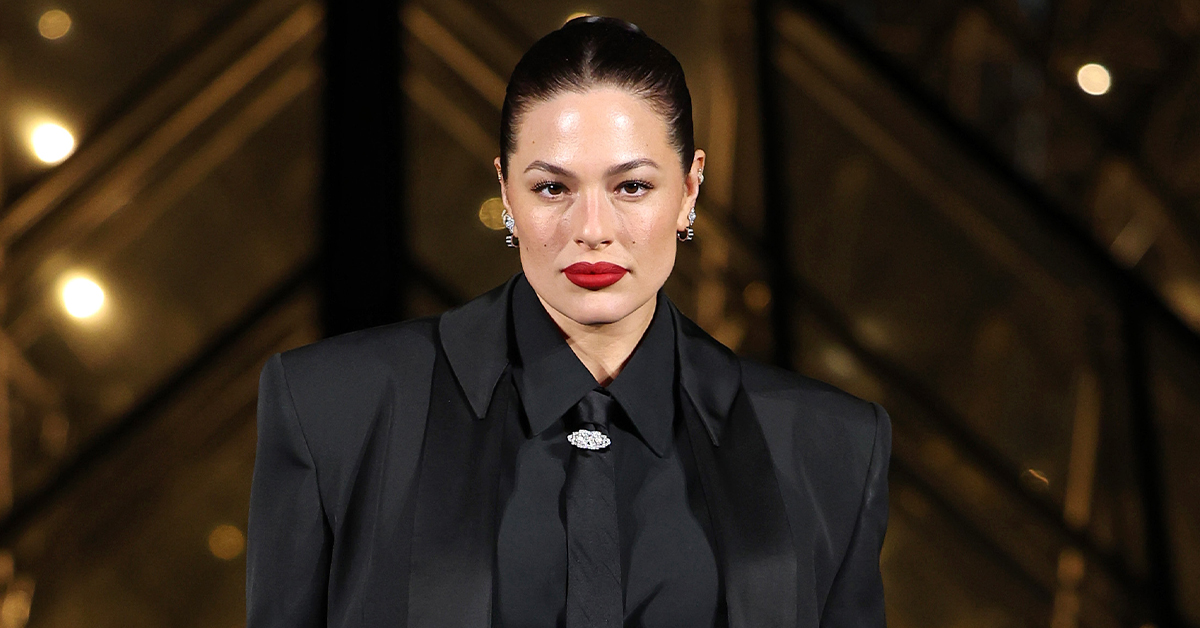
Ashley Graham is getting candid about the growing popularity of GLP-1 medications like Ozempic — and what the trend means for the future of body positivity.
The supermodel and longtime advocate for size inclusivity spoke with Marie Claire about the fashion industry’s shifting standards and the growing concern that ultra-thin body ideals are making a comeback.
For Ashley, who has spent years championing representation for plus-size women in fashion and media, the current moment feels complicated.
“It’s really disheartening. There was a pendulum that swung that was so body acceptance, positivity, everybody be who they want to be. And now it’s going back this whole opposite way that feels like a smack in the face to the women who have felt like they’ve had a voice.”
Over the past decade, Ashley became one of the most visible faces of the body positivity movement, helping redefine what mainstream beauty and fashion campaigns could look like. From magazine covers to major runway shows, she pushed an industry historically criticized for excluding anyone outside a narrow body standard.
Now, however, the rapid rise of GLP-1 medications — originally developed to treat diabetes but increasingly used for weight loss — has sparked renewed conversations about thinness, celebrity culture, and the pressure to shrink.
Still, Ashley says she doesn’t believe the progress made for plus-size representation is disappearing entirely.
Reflecting on the broader landscape, she explained that she has “seen more movement for plus-size women than some people give the whole industry credit for.”
When discussing the popularity of medications being used to achieve thinner frames, Ashley acknowledged that trends in beauty and body ideals tend to evolve in cycles.
“It goes with the times—and GLP-1s are a time…I know that there are and there’s gonna still be women who are considered plus size forever. This drug isn’t going to wipe out a whole statistic of women.”
Her comments arrive during an ongoing cultural conversation surrounding Ozempic and similar medications, particularly in Hollywood and fashion circles where dramatic physical transformations have become increasingly noticeable. Critics argue the trend risks undoing years of progress toward body acceptance, while others emphasize personal choice and medical autonomy.
Ashley appears to understand both the cultural anxiety and the reality that beauty standards are constantly shifting. But rather than becoming bitter or discouraged, she says she remains focused on the community that body positivity helped create.
“Why would I stop now and why would I get angry about the work I’ve done?…I put my head down and I focus on the women we’ve built the community with.”
The model also highlighted how social media has helped diversify representation in ways that traditional fashion spaces once resisted.
“There’s so many [plus size influencers and creators]…they’re all over the place with their sizes and their proportions and how they look and how they’re relatable. And to me, that’s the coolest part about all of this. Seeing that these girls, who were raised on social media at such a young age are now coming in and they have a platform to say to the younger generation, ‘Be yourself, be who you want to be. If you have cellulite, who cares?’”