
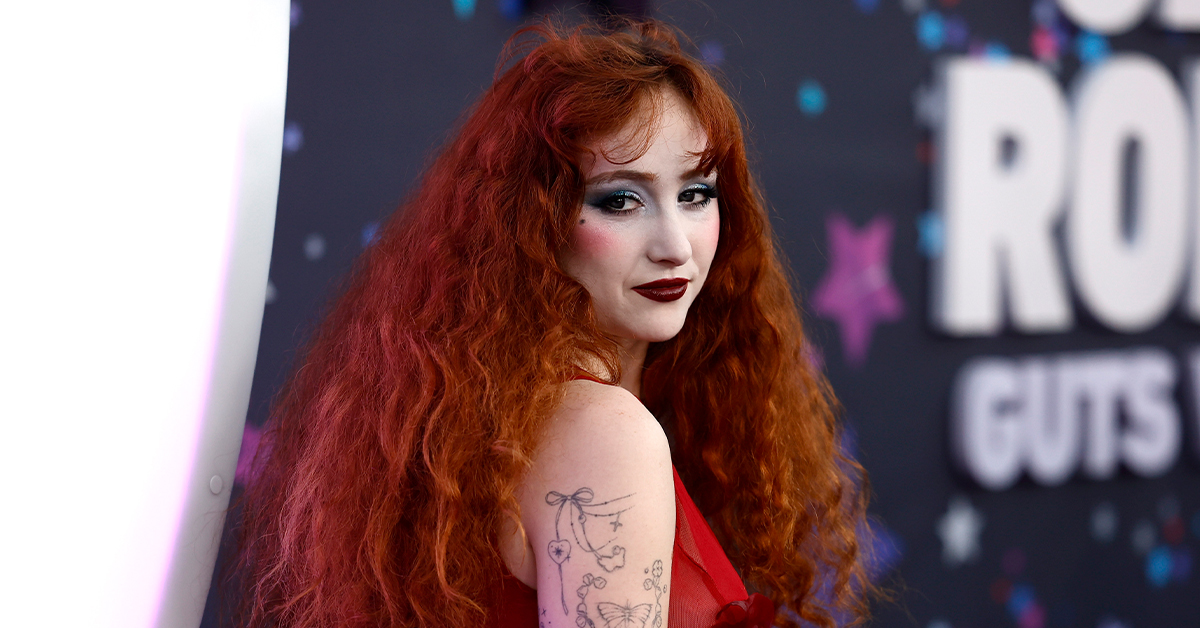
Chappell Roan has become one of music’s most celebrated new voices, but even with Grammy wins, sold-out shows, and a rapidly growing fanbase, the singer says navigating life online remains one of the most challenging aspects of modern fame.
The 28-year-old “Good Luck Babe!” hitmaker recently opened up about her complicated relationship with social media during an appearance on P&G and iHeartRadio’s Elton John Impact Awards podcast. During the conversation, Roan spoke honestly about the emotional toll of online discourse and explained why she chooses not to keep social media apps on her phone.
For an artist whose rise has been fueled in part by passionate fan communities online, her approach may seem surprising. But Roan says protecting her mental well-being has become a priority.
“It’s very disheartening sometimes to really go into the comment section,” Chappell admitted.
The singer has never been shy about discussing the pressures that come with public attention. Over the past year, Roan has become known not only for her chart success and theatrical performances but also for her willingness to speak openly about fame, boundaries, and the expectations placed on artists in the digital age.
As social media conversations become increasingly intense and fast-moving, Roan says she has developed a simple strategy for preserving her peace of mind.
“I just delete it when it becomes too much and keep it moving,” she shared. “Because at the end of the day, no matter what anyone says about me online or in person, it’s not gonna stop people like Elton [John] and I [from] donating money, donating time, writing about things that matter to us.”
The comment reflects a larger philosophy that has increasingly defined Roan’s public persona. Rather than allowing criticism or online debates to dictate her actions, she prefers to focus on real-world impact, whether through activism, philanthropy, or creative work.
During the podcast, Roan acknowledged that the internet can often feel overwhelming, particularly for artists whose careers are closely tied to public perception.
“It’s such a difficult world to navigate that personally, if I just delete it and keep it moving, I kind of make it out of that hurricane,” she explained. “But that’s hard for a lot of artists because, if you really rely on social media to fuel your momentum, that can be really disheartening and it can feel very hopeless.”
Her comments touch on an increasingly common challenge within the music industry. While social platforms have created unprecedented opportunities for artists to connect directly with fans, they have also intensified pressure to remain constantly visible and engaged.
Many musicians today rely on social media not only as a promotional tool but also as a critical part of career development. Viral moments can launch careers overnight, while online criticism can dominate headlines within hours. For emerging artists especially, stepping away from social platforms may not always feel like a realistic option.
Roan recognizes that reality and acknowledges that her own position affords her a level of flexibility that many others do not have.
“I’m in a very privileged position where I can be like, ‘I’m not gonna be on this and I’ll be fine.’ But not everyone is like that.”
The singer’s honesty about her experience has resonated with fans who appreciate her transparency. Rather than presenting fame as glamorous or effortless, Roan frequently discusses the complexities that come with public visibility and the importance of setting boundaries.
Her comments also arrive amid a broader conversation about mental health in entertainment, as more artists speak openly about burnout, online harassment, and the emotional demands of maintaining a constant digital presence.
For Roan, the solution isn’t necessarily to abandon social media entirely. Instead, it’s about recognizing when the noise becomes overwhelming and giving herself permission to step away.
As her career continues reaching new heights, the singer appears committed to protecting her peace, staying focused on her values, and remembering that meaningful work doesn’t begin and end in a comment section.