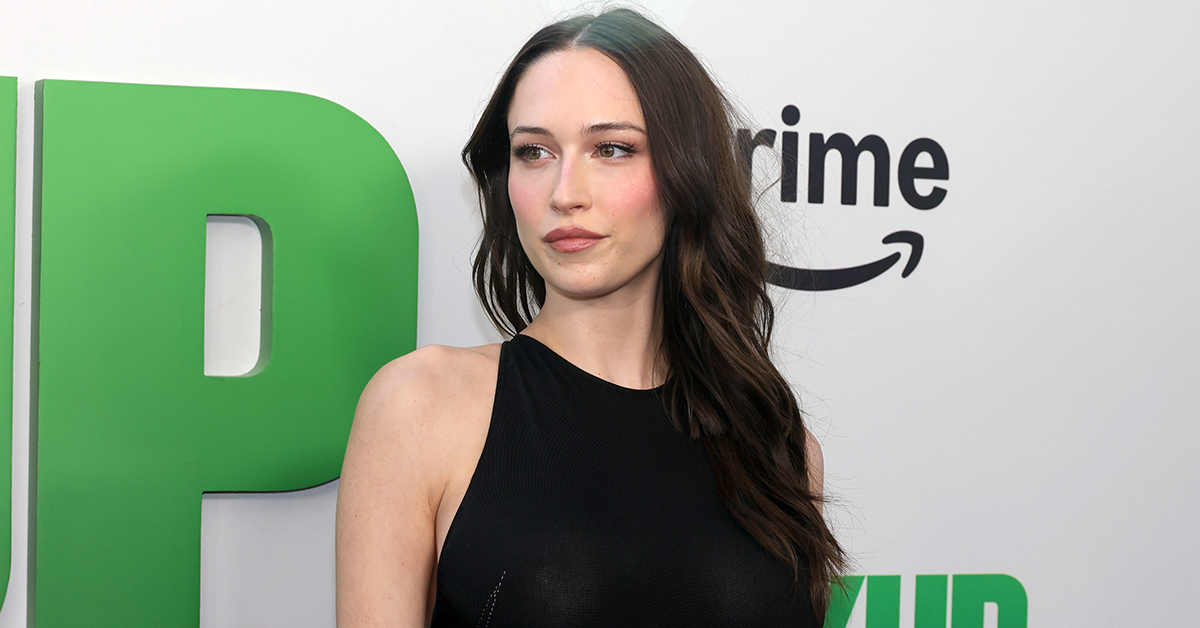
Elsie Hewitt is not interested in performing motherhood for approval.
The 29-year-old British model and actress, who recently welcomed daughter Scottie Rose Hewitt Davidson with Pete Davidson, is speaking candidly about one of the most scrutinized postpartum decisions: choosing not to breastfeed.
In a new interview with Elle, Elsie opens up about body autonomy, chronic illness, pregnancy struggles, and the complicated emotional terrain of early motherhood. Her reflections are layered, vulnerable, and refreshingly direct.
For Elsie, the conversation begins long before pregnancy.
“For years, my body has felt like it doesn’t belong to me. It belonged to an industry. To the gaze. To weeks spent barely able to get out of bed. To an illness. And then to pregnancy. My body has been looked at, assessed, consumed, and monetized. It has been poked and prodded and quite literally cut open.”
That sense of disconnection deepened after years of chronic pain that was ultimately diagnosed as stage 4 endometriosis.
“My pregnancy was unplanned. I got pregnant after many years of feeling disconnected from my body, for a number of reasons. I work in an industry where my body has largely been my livelihood. Making a living based on the way you look creates a uniquely complex relationship with your body. On top of that—and more recently and relevantly—I lived through years of chronic pain, dismissal, and misunderstanding that was finally diagnosed as stage 4 endometriosis. I underwent laparoscopic excision surgery and barely recovered before becoming pregnant.”
Pregnancy, she admits, was not the healing chapter she had hoped for.
“I had been looking forward to a stretch of my life where my body felt like mine again—where I wasn’t constantly managing pain or advocating to be believed. Pregnancy, in all honesty, completely derailed that. And I really struggled.”
“For the most part, I hated being pregnant. I was deeply uncomfortable. I was constantly sick, exhausted, and in pain. Because of my prior reproductive health issues, I chose to be under the care of an OB-GYN rather than a midwife. It was the most clinical approach to pregnancy and birth—not one I loved—but one I felt I needed for my health and safety. I found myself in yet another season of frustrating self-advocacy within a medical system that often fails to listen to women as carefully as it should.”
When it came to feeding her daughter, Elsie made a deliberate choice — and sat with the emotional weight of it.
“There is inherent guilt in choosing not to breastfeed. My body is biologically programmed to nourish my baby, and opting out of that can feel like going against something ancient, instinctual, and profoundly beautiful. That guilt doesn’t disappear simply because formula is safe, healthy, and nutritionally complete. I still have to remind myself—and sometimes literally ask to be told—that being mentally and emotionally okay is not separate from being a good mother.”
Her decision centered on presence.
“Sacrifice is already one of the most integral parts of becoming a mom. It’s about how we show up and why. I personally knew if I breastfed I would not be capable of being as present a mother as I have become.”
Still, the physical aftermath was complicated. Elsie developed mastitis, forcing her to confront conflicting emotions.
“I spent days icing my boobs, watching my body produce something I couldn’t give my baby even if I had decided I was going to breastfeed. The conflicting feelings I was experiencing felt like a mini war within my body and my mind. I had decided not to breastfeed—which I was already feeling guilty about—but my body was producing milk. I was grieving an experience that I chose not to have. All of these contradicting truths were a very confusing thing to reckon with during an already overwhelming time.”
Ultimately, her focus remained on recovery and shared responsibility.
“I wasn’t sure the benefits of breastfeeding outweighed the demand, isolation, and exhaustion that can come with it. I carried my daughter for over nine months. Once she arrived, I didn’t want to remain her sole lifeline in a way that would further deplete me, hinder my recovery, and leave little room for feeding to be shared between my partner and me.”
“The truth is, there is a profound imbalance in the physical and emotional labor of pregnancy, birth, postpartum, and beyond. Conception may begin with two contributors. After that, the physical load is singular. Biology assigned me the greater share of the burden. I chose to redistribute a small part of that weight by making feeding something we both carry.”
Notably, she did not feel pressured by those closest to her.
“It’s important for me to say this: I feel fortunate not to have felt pressure to breastfeed from the people in my life. My partner didn’t push me in either direction. My mother, who breastfed my sisters and me and was proud of that, made a point to tell me, simply, that the decision was entirely mine. She never said anything else, and her restraint meant a great deal to me. The OB-GYN and hospital staff didn’t try to persuade me either.”
Elsie’s story isn’t about one “right” choice. It’s about ownership — of body, health, and motherhood on her terms.