
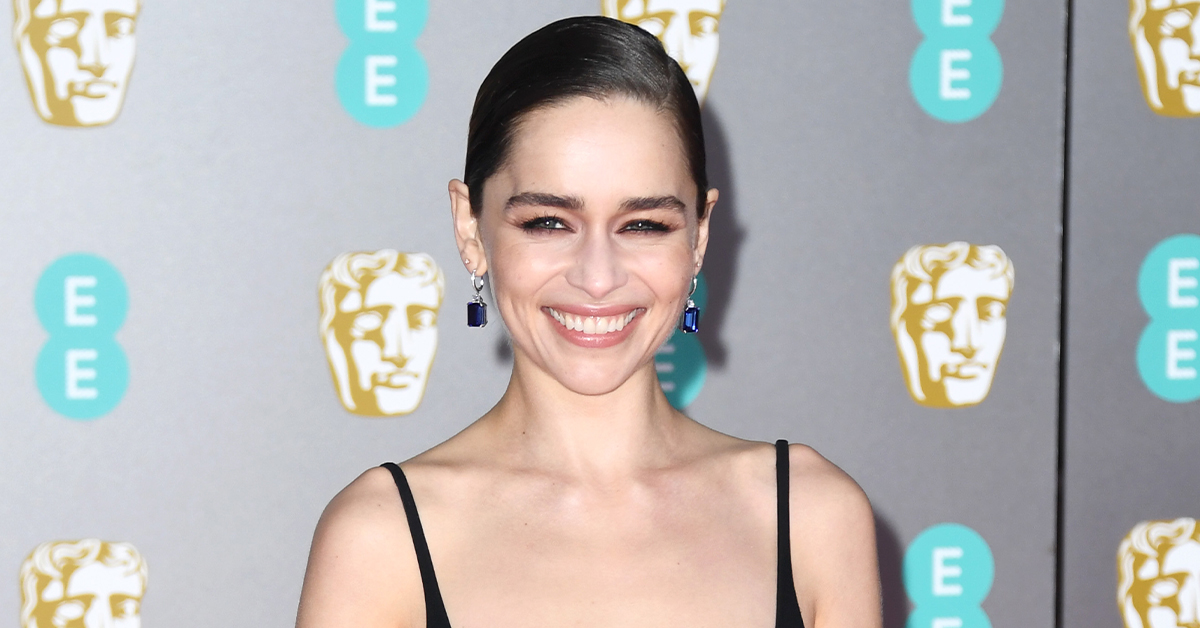
Years after Game of Thrones concluded its record-breaking run, Emilia Clarke is looking back on the experience with a fresh perspective.
The actress, who became a global star through her portrayal of Daenerys Targaryen in HBO’s fantasy phenomenon, recently opened up about everything from salary rumors and sudden fame to the polarizing final season and her evolving feelings about the character’s fate.
Speaking with Variety, Clarke offered rare insight into one of television’s most influential series and the lasting impact it had on her life and career.
One of the biggest misconceptions she addressed involved longstanding reports about how much the show’s stars were paid.
Over the years, headlines suggested that members of the main cast earned as much as $300,000 per episode. While Clarke acknowledged that Game of Thrones provided financial stability—including helping her family—she pushed back on the widely circulated figures.
“We didn’t earn that much. Can you imagine? I’d have been driving a couple of Porsches!”
Though the salaries may not have matched some reports, Clarke said the role still changed her life in meaningful ways, including allowing her to pay off her parents’ mortgage.
Beyond the financial benefits, however, came a level of fame she never could have anticipated.
“I spent a lot of time trying to understand it,” Clarke explained while discussing the global attention that followed the series.
“And then you realize it’s just a formula: The less you’re on TV, the less famous you are. It comes and it goes.”
The actress has previously spoken about the intense spotlight that accompanied the show’s success, but her latest comments suggest she has found peace with the experience and gained perspective over time.
Another topic that continues to generate discussion among fans is the fate of Daenerys Targaryen, whose controversial final-season storyline remains one of television’s most debated endings.
Despite fan speculation over the years, Clarke made it clear that actors had very little influence over creative decisions on the series.
“Aside from what I brought as an actor, I didn’t have any creative input, nor did I want any,” she said.
She praised the show’s creators while also acknowledging that, at the time, she trusted their vision completely.
Still, that didn’t mean she was thrilled with every story development.
When asked whether she could have persuaded the creative team to change Daenerys’ fate, Clarke admitted she was “absolutely livid” about how events unfolded.
“No,” she said, explaining that the creators were “fastidious about us saying the lines exactly as they’ve written them.”
The level of precision extended even to minor wording changes.
According to Clarke, if she said “it’s” instead of “it is,” she would often be asked to perform the scene again.
Ultimately, she viewed her responsibility as understanding and fully committing to the character’s journey.
“I was given the seasons, and I, to the best of my ability, empathized and understood and tracked every choice she made so it felt like mine. I felt like that was what my job was.”
Over time, Clarke says she has worked through her complicated feelings about the show’s ending and the intense public reaction that followed.
Today, she sees the experience through a lens of gratitude.
“I have gone through every circuitous route to get to the place that I am now, which is finally being able to be very grateful for everything that Game of Thrones did and has given me. I no longer feel trapped in it, or trapped in the result of being in it. I feel just really lucky that it happened to me — even luckier that I’ve had time to understand what that was, and now I feel firmly on the other side.”
For many actors, a career-defining role can become difficult to escape. Clarke’s reflections suggest she has finally found balance between honoring the legacy of Game of Thrones and embracing the future.
And while debates over Daenerys’ ending may continue among fans, Clarke’s relationship with the series appears to have reached a place of acceptance—one shaped by gratitude, perspective, and a deeper understanding of the extraordinary phenomenon she helped create.