

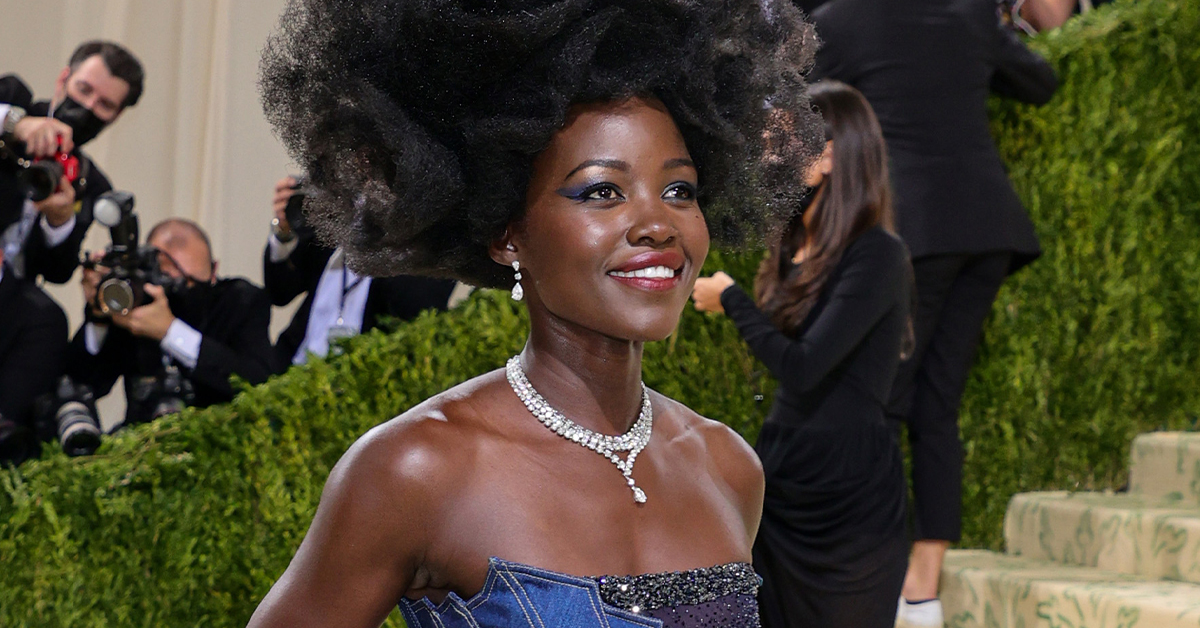
Lupita Nyong’o is turning a private health battle into public advocacy.
The 42-year-old A Quiet Place: Day One actress recently appeared on Today and revealed that she has been diagnosed with over 50 uterine fibroids — a condition she has been managing for more than a decade.
According to the Cleveland Clinic, uterine fibroids are noncancerous tumors that grow in or on the uterus. While some cause no symptoms, others can lead to heavy bleeding, pelvic pain, back pain, frequent urination, and discomfort during sex.
For Lupita, the journey began in 2014 — the same year she won her Academy Award for 12 Years a Slave.
“The first time I got the fibroids taken out, they took out 23,” she said.
Since then, the condition has progressed.
“And this time, I’ve been informed two years ago that I have over 50. And I’m being faced with the same options. Surgery or live with the pain,” she went on to say.
She has not yet chosen to undergo another myomectomy.
“I’m not ready to make that decision. It’s quite invasive… and it’s a big threat to our reproductive organs.”
To explain the scale of the condition, she shared how doctors often use fruit as comparison.
“When you have fibroids, doctors usually use fruit to explain to you what size your fibroids are. So your fibroid could be the size of a grape. My biggest fibroid is the size of an orange,” she explained.
Beyond the physical toll, Lupita described the emotional weight.
“I felt shame. What did I do to cause them? And I felt very alone and quite scared for my reproductive health,” she said.
That isolation shifted when she began speaking publicly.
“I’m excited right now because speaking up has really empowered me. I’ve found community. I’ve locked arms with women who have been fighting this fight for a long time…there’s a lot of power in speaking up. I spoke up and the amount of support I got hearing women say ‘me too’ and share their stories made me feel less alone and it’s honestly what has bolstered me to do the work that I do now.”
Now, Lupita is raising money to support research and improve treatment options.
“I think it’s high time we speak up to ensure that this is no longer trivialized and it’s no longer considered normal just because it’s common,” she added.
Her message is clear: common does not mean insignificant.
By sharing her story, Lupita is expanding the conversation around women’s reproductive health — one that too often gets minimized. And in doing so, she’s turning vulnerability into visibility.